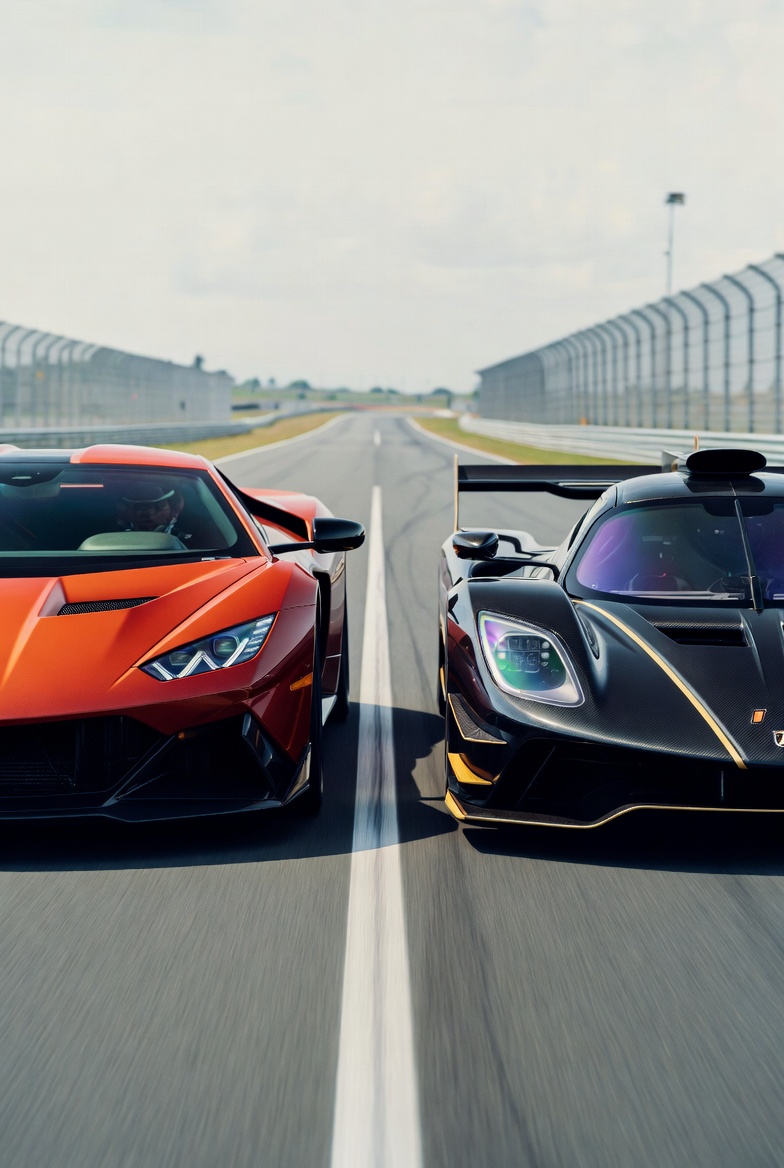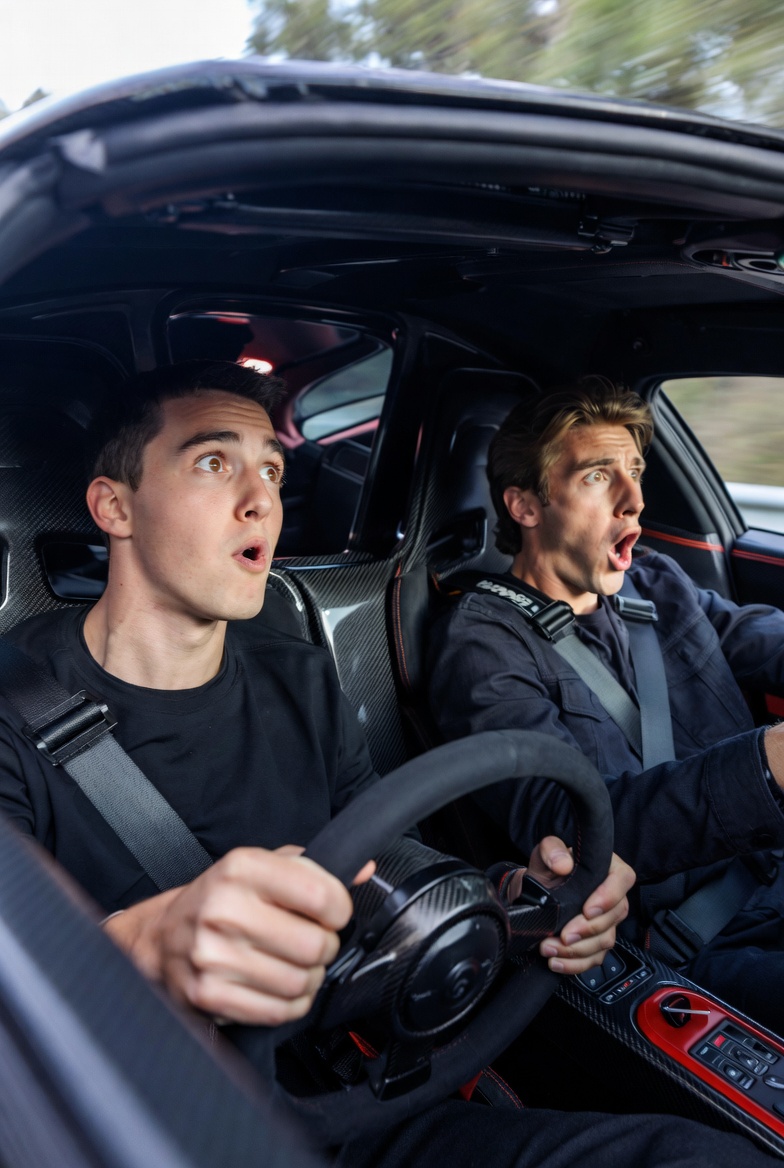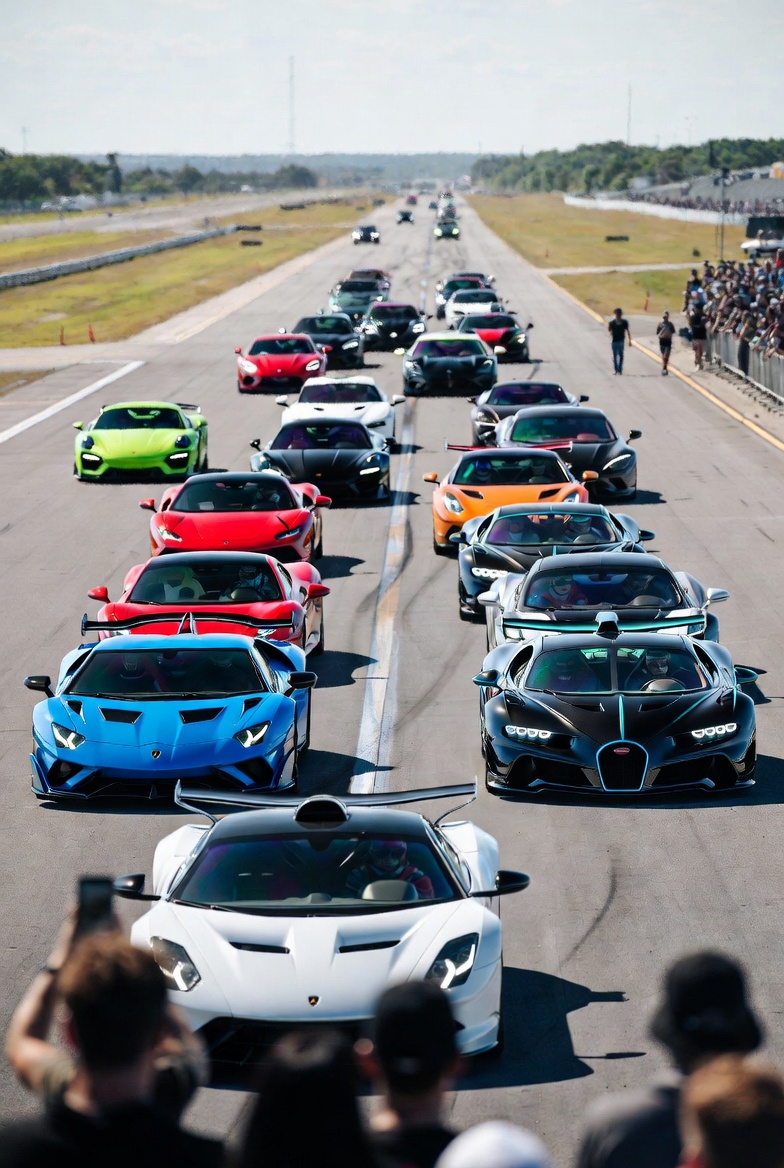
The United States has become one of the most exciting places in the world for high performance car culture. In 2026, private airstrips and racetracks across the country are hosting some of the most intense drag races ever seen. Among the most talked about events is the supercar fleet vs hypercar fleet drag race in the USA.
This type of race is more than just speed. It is a battle of engineering, power, technology, and driver control. Supercars and hypercars may look similar to casual fans, but their performance levels are very different. In this article, we explore what happens when a full supercar fleet lines up against a hypercar fleet in a straight line drag race.
Understanding the Difference Between Supercars and Hypercars
Supercars are high performance vehicles designed for speed, handling, and everyday usability. Examples include cars from Ferrari, Lamborghini, McLaren, and Porsche. These cars usually cost between 300,000 and 800,000 dollars.
Hypercars go far beyond that level. They feature extreme power output, advanced aerodynamics, hybrid systems, and limited production numbers. Hypercars often cost more than 1 million dollars and are built without compromises.
When these two categories face each other in a drag race, the differences become very clear.
The Supercar Fleet Lineup
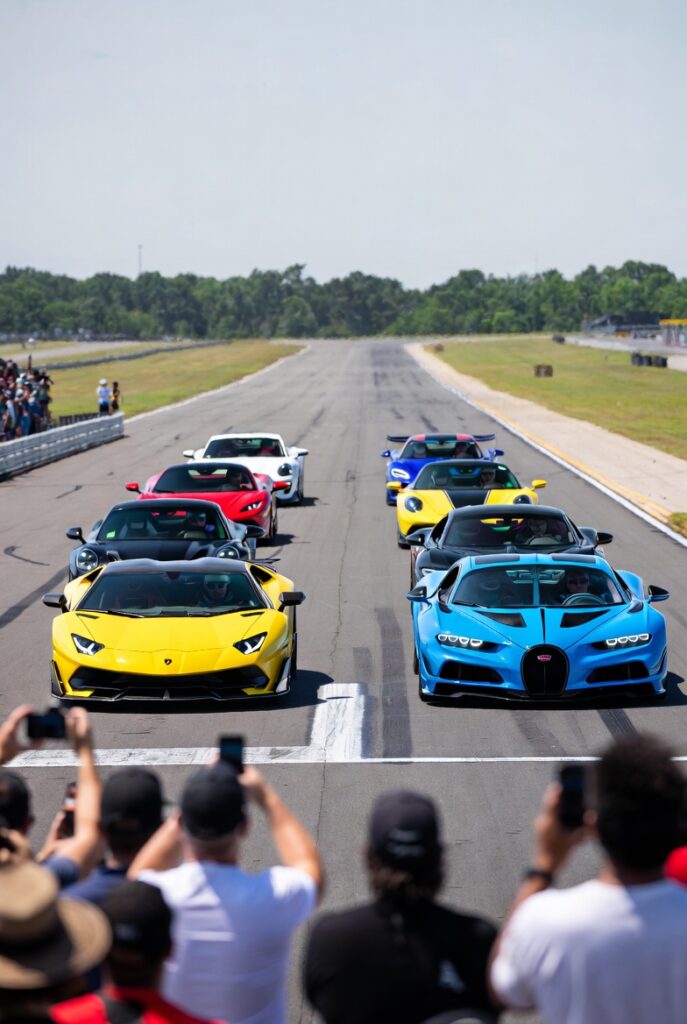
The supercar fleet in this USA drag race includes some of the most powerful production cars available to the public.
Cars like the Lamborghini Aventador SVJ bring a naturally aspirated V12 engine with explosive throttle response. The Ferrari SF90 delivers instant hybrid acceleration with advanced all wheel drive. The McLaren 765LT offers lightweight design and massive turbocharged power. The Porsche 911 Turbo S provides consistent launches and strong acceleration.
These supercars are extremely fast and capable of shocking performance, especially over short distances.
The Hypercar Fleet Lineup
The hypercar fleet represents the highest level of automotive engineering.
Cars like the Bugatti Chiron Super Sport dominate with quad turbocharged W16 power and unmatched stability. The Koenigsegg Jesko delivers insane horsepower and lightweight construction. The Rimac Nevera uses electric power to achieve instant torque and perfect launches. The Aston Martin Valkyrie brings Formula level aerodynamics and high revving power.
Each hypercar in the fleet is designed to push beyond normal limits.
Setting the Stage for the Drag Race
The drag race takes place on a closed runway in the USA, ensuring safety and maximum performance. Professional drivers handle each vehicle, and conditions are carefully controlled.
All cars use high performance tires and are set to optimal driving modes. Launch control systems are engaged where available, allowing each car to deliver its best possible acceleration.
Launch Phase Performance
At the start of the race, launch performance is critical. Supercars like the Porsche 911 Turbo S and Ferrari SF90 perform extremely well due to advanced traction systems.
However, hypercars quickly show their advantage. The Rimac Nevera launches instantly with no delay, while the Bugatti Chiron delivers overwhelming force once the turbos spool up.
Within the first few seconds, the hypercar fleet begins to pull ahead.
Acceleration and Mid Run Power
As the race continues, horsepower and aerodynamics play a bigger role. Supercars start to struggle as power delivery tapers off.
Hypercars maintain relentless acceleration. The Koenigsegg Jesko continues to gain speed aggressively, while the Bugatti Chiron remains planted and stable even at extreme speeds.
By the halfway point, the gap between the fleets becomes obvious.
Finish Line Results
At the finish line, the hypercar fleet clearly dominates. While some supercars manage impressive times, they simply cannot match the raw power and engineering of hypercars.
Electric hypercars like the Rimac Nevera set some of the fastest times due to instant torque. Traditional combustion hypercars follow closely with overwhelming top end speed.
Supercars remain fast, but hypercars operate in a completely different league.
Why Hypercars Dominate Drag Racing
Hypercars are built without compromise. They feature more power, advanced materials, and cutting edge technology.
Higher horsepower figures allow them to continue accelerating beyond speeds where supercars begin to slow. Advanced aerodynamics keep them stable, and specialized transmissions deliver power efficiently.
These advantages are most noticeable in straight line drag racing.
The Role of Drivers and Skill
Although these cars feature advanced technology, driver skill still matters. Smooth throttle control, reaction time, and understanding each vehicle’s behavior can affect results.
Professional drivers ensure that each car performs at its maximum potential, allowing a fair comparison between fleets.
Cost vs Performance Comparison
One of the most interesting aspects of this drag race is cost comparison. Some supercars costing under 400,000 dollars can outperform older hypercars in short sprints.
However, modern hypercars justify their high price with unmatched consistency, top speed, and engineering depth.
Fan Reactions and Media Attention
Events like supercar fleet vs hypercar fleet drag races attract massive attention in the USA. Enthusiasts gather to witness these machines in action, and videos of such races often go viral online.
The sound, speed, and spectacle create unforgettable moments for fans.
Are Supercars Becoming Obsolete
Despite the dominance of hypercars, supercars are far from obsolete. They offer a balance of performance, usability, and price.
For most drivers, supercars provide more than enough speed and excitement. Hypercars are reserved for those seeking the absolute extreme.
Future of Drag Racing in the USA
As electric technology advances, drag racing will continue to evolve. Electric hypercars are already changing the game with instant acceleration.
Future races may include hybrid and electric supercars that narrow the gap between categories.
Final Thoughts
The supercar fleet vs hypercar fleet drag race in the USA highlights the incredible progress of automotive performance. While supercars deliver thrilling speed and excitement, hypercars dominate with overwhelming power and technology.
Both categories play an important role in car culture. Together, they push innovation forward and keep enthusiasts inspired.